In 2026, Apex Trader Funding remains a leading proprietary trading firm for futures. However, the ecosystem has implemented a structural "4.0" update that has completely redefined the rules for retail traders.

Replacing the previous subscription model, Apex has transitioned to a One-Time Payment (OTP) system. While this eliminates the financial burden of monthly recurring fees, it introduces a strict 30-day evaluation window. If the profit target is not reached within 30 days, the evaluation account automatically expires. There are no resets; failure requires starting a new evaluation.

Whether utilizing the Intraday Trail or the EOD (End-of-Day) Trail, the evaluation process requires strict risk management. Utilizing discount cycles, such as the 85% Off WDRFRMJD promo code, Apex provides cost-effective access to institutional CME liquidity.

This guide analyzes the parameters, the 6-payout lifecycle, and the risk-management rules required to secure funding in the current futures market.

Key Features of Apex 2026 at a Glance

  • The OTP Structure (No Recurring Fees): Apex has eliminated monthly recurring fees. Traders pay a one-time fee for a 30-day evaluation. During promotional periods, 50K evaluation accounts are available at a lower entry cost, requiring efficient execution without ongoing subscription burdens.
  • The 30-Day Strict Expiry: Traders have exactly 30 calendar days to reach the profit target. If the time limit is reached, the account is closed.
  • Two Account Pathways: The legacy "Standard" account is retired. Traders must choose between the Intraday Trail or the EOD Trail. Both pathways feature a mandatory 6-payout lifetime cap and 5-day withdrawal cycles.
  • The 7-Day PA Window: Once passed, traders have exactly 7 calendar days to pay the activation fee and sign the required contracts (W-8BEN/KYC), or the passed evaluation is voided.
  • Simulated Integrity: All accounts are live-simulated (SIM), providing a zero-liability environment for traders to demonstrate profitability against institutional-grade CME data.

1. Overview: What is Apex Trader Funding?

Apex Trader Funding is a major proprietary trading firm founded in 2021 in Austin, Texas. Operating under the motto "Traders Helping Traders," the firm provides funded accounts to futures traders who demonstrate strict risk management. By 2026, it has developed into a structured platform focused on disciplined trading rather than discretionary retail speculation.

1.1. Direct Access to CME Data

Apex provides a direct connection between retail traders and the Chicago Mercantile Exchange (CME). Unlike the B-Book execution models common in retail CFD Forex trading, Apex offers centralized exchange data (Level 2 order flow). Executions are processed through the live market order book, providing traders with the same liquidity pool used by institutional participants.

1.2. Company Size & Total Payouts

A key metric for evaluating a prop firm is its payout history. As of March 30, 2026, Apex has distributed over $738,740,000 to traders. The firm serves over 100,000 users globally and processes withdrawals through established compliance platforms like Rise and Plane. This infrastructure ensures that capital distributions are handled via standard banking and cryptocurrency channels, establishing Apex as a stable entity in the futures prop trading industry.

Apex Trader Funding total payout statistics showing $738M+
Apex Trader Funding 738M total payout statistics

1.3. The New 4.0 "One-Time Payment" Rules

In March 2026, Apex updated its business model by replacing the legacy "Standard" uncapped accounts with the 4.0 "One-Time Payment" (OTP) structure.

  • Elimination of Subscriptions: Monthly recurring fees have been removed entirely.
  • The 30-Day Evaluation: Traders now pay a single flat fee for a strict 30-day evaluation window.
  • Focus on Short-Term Trading: The updated model prioritizes fast execution over long-term account holding. Traders are required to reach profit targets within the time limit, manage the trailing drawdown, and withdraw profits within a structured 6-payout lifecycle.
Apex Trader Funding knowledge base page
Apex Trader Funding knowledge base page showing legacy products category

Rule Changes: Old vs. New Apex Model

To understand the impact of this update, returning traders must recognize that previous strategies will no longer work. The table below outlines the key differences between the legacy system and the new 4.0 model:

Operational MetricLegacy Era (Pre-2026)The 4.0 Era (2026 - Present)Impact on Trader
Pricing StructureMonthly SubscriptionsOne-Time Payment (OTP)Eliminates recurring billing stress.
Evaluation WindowUnlimited Time30-Day Hard ExpiryForces high-velocity execution.
Account LifecycleLifetime (Uncapped)6-Payout Retirement CapAccounts are now disposable assets.
Consistency Rule30% Hard Limit50% Flexible LimitEasier to withdraw after a volatile day.
Metals (GC/SI)Fully TradableStrictly ProhibitedForces focus on indices (NQ/ES).
Reset Penalty$80 Reset FeeNo Resets AllowedCheaper to buy a new ~$65 evaluation.
Expert Note

This isn't just a pricing change; it's a filter. The 30-day hard expiry forces you to trade with purpose. Accounts without a strict risk management strategy will consistently fail the evaluation.

1.4. Account Types: Intraday vs. EOD Drawdown

To align with the 4.0 One-Time Payment model, Apex has completely restructured its account offerings into two distinct pathways. Choosing between them dictates your fundamental risk management strategy:

  • Intraday Drawdown Accounts: Designed for precision scalpers. The trailing drawdown is calculated in real-time based on your highest unrealized profit. It requires extreme discipline but offers the lowest entry cost.
  • EOD (End of Day) Drawdown Accounts: Engineered for swing traders or those who need wider intraday buffers. The drawdown is only calculated at the close of the trading day (4:59 PM ET), preventing a mid-day retracement from liquidating the account, though it carries a higher upfront cost and a strict Daily Loss Limit (DLL). (Detailed pricing and mechanical analysis for both pathways are broken down in Sections 5 and 7).

2. Performance Ratings & Scorecard

In 2026, the Apex Trader Funding model requires strict adherence to its new rules rather than long-term account holding. It is a highly effective platform for disciplined traders looking to build capital quickly. However, without a strict risk management plan, the 30-day evaluation limit and the trailing drawdown will cause most accounts to fail before reaching the first payout.

The 2026 Scorecard:

Trust & Reliability⭐⭐⭐⭐⭐4.8/5With over $738M in verified payouts and a history since 2021, they are an established institution in the futures industry.
Pricing⭐⭐⭐⭐⭐5.0/5At ~$65 for a 50K evaluation, the entry cost is virtually zero. No other firm matches this cost-to-capital ratio.
Payout Velocity⭐⭐⭐⭐☆4.5/5Weekly payout cycles (every 5 trading days). High speed, but governed by the mandatory 6-payout retirement cap.
Rule Complexity⭐⭐⭐☆☆3.0/5The 30-day expiry, 50% consistency rule, and leverage limits require a strictly disciplined approach.

3. Our Take: The Best Strategy for Apex 2026

In the Apex 2026 environment, success requires a fundamental shift in how you view account sizes. Rather than treating the displayed account balance as actual trading capital, professional traders focus entirely on the drawdown buffer.

3.1. Drawdown Buffer vs. Displayed Account Balance

Many new traders focus on the $150,000 account balance (the largest available in the OTP model), assuming it provides significant buying power. However, the mathematical reality of the Drawdown Buffer reveals a different picture:

  • The $150K Account: This account only provides a $4,000 drawdown limit. On a highly volatile instrument like the Nasdaq (NQ), a single execution error or a standard 20-point retracement with maximum contracts can trigger this limit immediately.
  • The Reality: A $150K account is essentially a $4,000 account with high leverage. If you breach the drawdown limit on this single account, you lose 100% of your progress and must purchase a new evaluation.

3.2. The 20-Account Strategy: Maximizing Your Drawdown Buffer

The professional multi-account strategy focuses on maximizing your total drawdown buffer. Instead of relying on a single large account, traders use a trade copier (e.g., Replikanto or Tradovate Groups) to execute the same trades across up to twenty $50,000 accounts simultaneously.

Metric1x $150K Account20x $50K Accounts (Multiple Accounts)
Total Tradable Buffer$4,000$40,000 ($2,000 x 20)
Estimated Cost (Discounted)~$132.00~$1,300.00
Max Contracts (PA)10 Minis80 Minis (4 Minis x 20)
SurvivabilityLow (Single point of failure)Extreme (19 backups if 1 fails)

Why the multi-account strategy wins: If you trade one 50K account and make a modest $150 profit, it feels insignificant. But when that same single click is copied across 20 accounts, you have just netted $3,000. This reduces individual account risk while maximizing total withdrawal potential. If one account in the portfolio hits a technical glitch, you still have 19 accounts generating revenue.

3.3. Strategy: Withdraw Profits and Replace Accounts

In the 2026 ecosystem, Apex is not a place for "long-term investing." Due to the 6-Payout Retirement Cap, every account is now a disposable asset.

  • The Profit Buffer Goal ($52,100): Your primary mission is to grow each 50K account to a balance of $52,100. At this exact moment, the Intraday/EOD trailing drawdown permanently stops moving and locks at $50,100 (Starting Balance + $100).
  • Profit Buffer: Once your drawdown is locked at $50,100, any profit above that is your withdrawable margin. Professional traders never withdraw below this line, as it keeps their risk buffer alive.
  • The Extraction Mindset: Once you reach the profit buffer, you begin withdrawing. You extract profits every 5 days. After the 6th approved payout, the system automatically retires the account.
Key Takeaway

Apex is a highly effective platform for building initial trading funds. However, due to the 6-payout cap, it is not designed for long-term trading. The most practical approach is to use the multi-account strategy to reach your withdrawal limits, then transfer those profits to a personal brokerage account where there are no trailing drawdowns, consistency rules, or payout caps.

Ready to Start Your Evaluation?

Use promo code WDRFRMJD to get 85% Off your 50K evaluation account. One-time payment, no recurring fees.

WDRFRMJD

4. Is Apex Trader Funding Reliable? (Addressing Scam Rumors)

In the prop trading industry, "Is it a scam?" is a frequent question. For Apex Trader Funding, the answer in 2026 is a definitive No. However, the platform operates on strict evaluation rules. Traders who fail to manage risk according to these parameters will fail the evaluation.

Apex Trader Funding Benzinga and NASDAQ Awards

4.1. CME Connectivity & Live Market Data

Most retail traders come from the CFD Forex market, where "B-Book" brokers often manipulate spreads or execute against client positions. Apex does not operate this way.

  • Centralized Limit Order Book (CLOB): When trading on Apex, users connect to the CME. This is a transparent ledger where every price tick matches the exact pricing seen by institutional funds.
  • Zero Broker Control: Apex cannot widen the spread. They do not own the price feed; they provide the bridge to it. Market movements, not the broker, dictate stopped-out positions.
  • Institutional Auditability: Every fill is auditable against the time-stamped public record of the CME. In the futures market, the "rigged" narrative is disproven by the use of centralized data.

4.2. Understanding the 1-Star Reviews

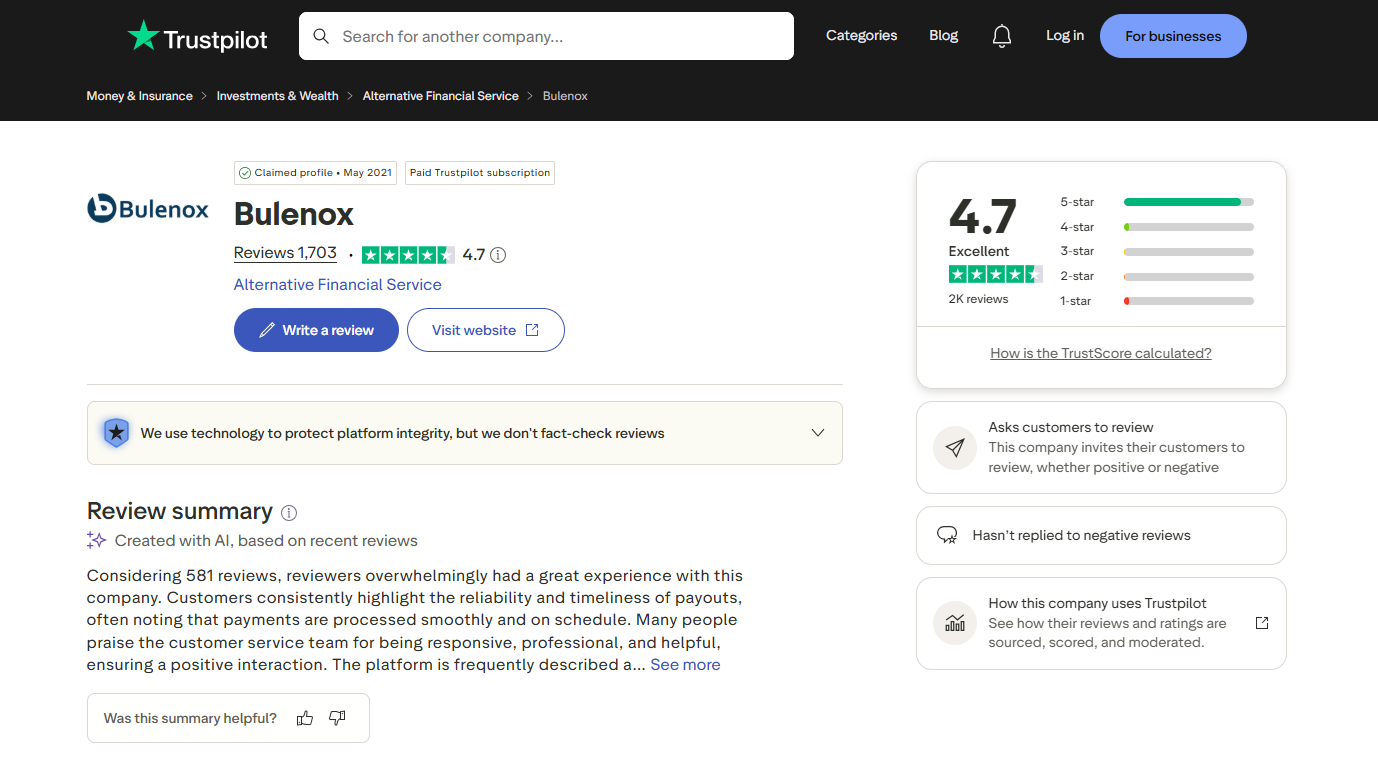
If you browse Trustpilot, you will find 1-star reviews from traders claiming the firm closed their accounts unfairly. These complaints generally align with broader industry data: nearly 90% of retail traders fail their prop firm evaluations, with over 70% of those failures caused by breaching drawdown limits. In the Apex ecosystem, the majority of these complaints are the result of traders hitting one of two specific technical parameters:

  • Trailing Drawdown Mechanics: Traders watch their balance grow to $52,000 and then pull back to $51,000, assuming they have a $1,000 profit. However, because the Intraday Trailing Drawdown tracks the Peak Unrealized Balance, their liquidation point moved up while the trade was in profit. When the trade retraced, they hit the threshold and were liquidated.
  • The 50% Consistency Denial: In 2026, the consistency rule is 50%. If a trader makes $4,000 total profit, but $2,100 of that came from a single news-based trade, their payout will be denied. Apex requires a consistent strategy, not isolated large wins.
Apex Trader Funding 4.4 star Trustpilot rating

4.3. Verified Payouts and Compliance

Legitimacy is proven by the flow of capital. In 2026, Apex has maintained its standing through:

  • $738M+ Verified Payouts: This is the key metric. A firm that has distributed over $738 million through regulated fintech platforms like Rise and Plane operates within established financial frameworks.
  • Regulatory Compliance: Apex requires rigorous KYC and W-8BEN tax documentation for every funded trader. This institutional compliance ensures they operate within the legal frameworks of the United States.
Apex Trader Funding approved payout proof 2026
Key Takeaway

Apex enforces strict operational boundaries. The majority of scam accusations stem from traders misunderstanding or violating the automated evaluation rules.

5. Pricing and the 30-Day Evaluation Window

In March 2026, Apex officially removed recurring subscriptions. The days of managing monthly credit card rebills are over. However, this transition to the One-Time Payment (OTP) model has turned the evaluation process into a fixed 30-day term.

5.1. Account Sizes and Prices: Intraday vs. EOD

The price gap between the two pathways reflects the difference in drawdown mechanics. EOD (End-of-Day) accounts carry a higher cost because they calculate the trailing drawdown only at the market close, providing a larger margin for error.

Account Size Intraday Trail (OTP) EOD Trail (OTP) Profit Target Max Drawdown Drawdown Efficiency*
25K $118.00 $199.00 $1,500 $1,500 $1.00 Target per $1.00 Risk
50K $131.33 $249.00 $3,000 $2,000 $1.50 Target per $1.00 Risk
100K $198.00 $349.00 $6,000 $3,000 $2.00 Target per $1.00 Risk
150K $264.67 $499.00 $9,000 $4,000 $2.25 Target per $1.00 Risk

*Drawdown Efficiency: The lower the target-to-risk ratio, the easier the account is to pass. This is why the 50K account is the industry standard for the multi-account strategy.

The "WDRFRMJD" Discount Reality: While the base prices are standard for the industry, Apex frequently runs 50% discount cycles. Using the official promo code WDRFRMJD, a 50K Intraday account typically costs just ~$65.66.

5.2. The 30-Day Expiration Rule

Under the current mandate, the evaluation is no longer an open-ended process; it has a strict 30-day limit.

  • The Countdown: From the second your payment is processed, the 30-day timer starts.
  • Account Closure: If you haven't hit the Profit Target by 4:59 PM ET on Day 30, the account is closed. Even if you are up $2,999 on a 50K account, the system automatically closes the account.
  • Strategy Shift: This forces traders to take higher-probability setups early in the month rather than waiting for setups that may never occur before the evaluation expires.

5.3. No More Resets: Buying New Accounts

One of the most significant changes in 2026 is the total removal of the $80 Reset Fee.

  • Previous System: Traders would pay $80 to reset a discounted account due to the "sunk cost fallacy."
  • Current Rule: Resets are no longer available. If you breach the drawdown or hit the Daily Loss Limit (DLL), the account permanently fails.
  • Strategic Approach: Because purchasing a new evaluation during promotional cycles is statistically cheaper than the legacy reset fee, professional traders simply delete failed accounts and start fresh. This keeps the dashboard clean and prevents emotional trading attempting to recover a failed account.

5.4. Performance Account (PA) Activation Fees

Passing the evaluation is only the first financial requirement. To begin generating withdrawable funds, you must pay the Performance Account (PA) fee.

  • PA Fee Estimate: Typically $130 - $160 (lifetime) or $85 (monthly - though mostly phased out in 2026).
  • The 7-Day Window: You have exactly 7 calendar days from the moment you pass to pay this fee and sign your W-8BEN/tax forms.
  • Voided Evaluations after 7 Days: If you miss this 7-day window, Apex voids the pass. There are no reinstatements for missing the deadline.

5.5. Which Account Size is the Best Value?

If you are looking for the best value, the 50K Intraday is the most mathematically efficient option of 2026.

  • Lowest Cost per Risk Dollar: You are essentially paying a discounted entry fee to access a $2,000 risk buffer.
  • Passable Target: The $3,000 target is achievable in a few high-volatility trading sessions.
  • Low Activation Overhead: The PA fee for 50K accounts is significantly lower than for 150K accounts, keeping your total "all-in" cost under $200.
Apex Checkout with {offer.couponCode} discount code applied
Apex Checkout with WDRFRMJD discount code applied
50K Evaluation from ~$65 with WDRFRMJD

The most cost-effective entry into futures prop trading. One-time payment, no subscriptions.

WDRFRMJD

6. Platform Choice: Rithmic vs. Tradovate vs. WealthCharts

For Apex in 2026, your choice of platform is more than just a preference for a user interface; it is a choice of drawdown logic. Depending on which engine you choose, the underlying mechanics regarding how your trailing drawdown behaves during the evaluation phase change significantly.

6.1. The Rithmic & WealthCharts Advantage: Fixed Drawdown at Profit Target

For the professional multi-account trader, Rithmic (paired with NinjaTrader 8) remains the leading standard for execution speed. However, a highly effective alternative in 2026 is WealthCharts, which brings advanced cycle analysis and a built-in trade copier to your Apex accounts.

The primary technical advantage of both Rithmic and WealthCharts in the evaluation phase is the target lock:

  • The Logic: Once your account balance hits the profit target (e.g., $53,000 for a 50K account), the trailing drawdown permanently freezes.
  • The Benefit: You can no longer fail the account due to trailing drawdown once the target is reached. You simply flatten your positions and wait for the passed status at the next server sync.
  • WealthCharts Bonus: It is web-based and mobile-ready, providing a built-in copier (OmniProp technology) that does not require third-party software like Replikanto.

6.2. Tradovate Warning: The Continuous Trailing Drawdown Risk

Tradovate has a highly modern and user-friendly interface, but for an Apex evaluation, it contains a specific technical mechanism known as the Continuous Trail.

  • The Mechanic: Unlike Rithmic, the Tradovate engine trails indefinitely with the peak account balance during the evaluation.
  • The Risk Scenario: If you have a large winning trade and your balance touches $53,100 (passing the 50K target), the drawdown follows you up to $51,100. If you do not immediately flatten and the market retraces, Tradovate's internal logic may still liquidate your account before the Apex servers sync the passed status at the end of the day.
  • The Verdict: Tradovate is highly effective for the Performance Account (PA) phase, but it carries additional technical risk during the 30-day evaluation period.

6.3. Mobile Trading via TradingView

Despite the continuous trailing risk, Tradovate remains the top choice for traders who require mobile access.

  • TradingView Integration: Tradovate is the only platform that allows you to trade your Apex account directly through the TradingView interface (web, desktop, or mobile app).
  • The Workflow: Traders use TradingView's advanced charting and alerts to execute and manage trades directly from a phone or tablet.
  • The Strategy: Most mobile traders use Tradovate for their funded PA accounts (where the drawdown stops trailing at the profit buffer) but stick to Rithmic for the initial evaluation to ensure the target lock safety.

6.4. Platform Comparison Guide

Choosing your software is a strategic decision based on your hardware, mobility, and tolerance for the continuous trailing risk. The following table breaks down the essential trade-offs to help you determine which backend best supports your trading setup.

Feature Rithmic (+ NT8) WealthCharts Tradovate
Eval Target Lock Yes (Safe) Yes (Safe) No (Continuous)
Native Trade Copier Requires Replikanto Included (Free) Group Trade
Mobile/Cloud Access None (Windows Only) Web-based Best (App/TV)
Best For High-Volume Scalpers Visual / AI Traders Mobile Traders
Setup Complexity High (Technical) Medium Easy (Plug & Play)

6.5. Platform Selection is Final (No Refunds)

When applying the WDRFRMJD promo code at checkout, your platform selection (Rithmic vs. Tradovate) is permanent.

  • No Platform Switching: Due to differing data routing and fee structures, Apex physically cannot convert a Rithmic account to a Tradovate account (or vice versa) once it is created.
  • No Refunds: Apex enforces a strict no-refund policy. If you accidentally purchase Tradovate but intended to use Rithmic for your multi-account copier, selecting the incorrect platform requires purchasing a new evaluation.

7. Key Trading Rules You Must Follow

While the low entry cost of the current ecosystem is attractive, the automated logic of the Apex algorithm determines your longevity. These rules are designed to filter out undisciplined trading and prioritize those who can execute a plan under strict technical constraints.

7.1. Passing the Evaluation in One Trading Day

The requirement to trade for 10 or 15 days no longer applies. Under the modern OTP (One-Time Payment) protocols, the time barrier has been removed, but it has been replaced by a strict execution requirement.

  • The Rule: You only need one (1) active trading day to reach the profit target and pass the evaluation.
  • Strategic Approach: While passing in a day is possible, professionals often use 2–3 days to avoid triggering inconsistent trading flags and ensure their win is not an anomaly from a single high-volatility event. This also helps in maintaining a better consistency score for the transition to funded status.

7.2. Leverage Reduction: Contract Limits for Funded Accounts

A frequent error for new traders is assuming the leverage used to pass the evaluation will be available once funded. The current framework implements a significant reduction in leverage for new Performance Accounts (PA).

Account Size Eval Max Contracts PA Initial Limit (Level 1) Micro Multiplier
50K Account 10 Minis 2 to 4 Minis 40 Micros (1:10)
100K Account 12 Minis 6 Minis 60 Micros (1:10)
150K Account 15 Minis 8 Minis 80 Micros (1:10)
  • The Reality: If you pass a 50K account using 10 contracts and attempt to open 10 contracts in your PA, the system will reject the trade or immediately fail the account for a contract violation.
  • Strategy: You must "de-leverage" once you reach PA status. Utilizing the 1:10 micro ratio is a highly effective method; it allows you to trade 20-30 micros to build your initial buffer before scaling back up to full mini contracts.

7.3. Choosing Your Drawdown Type: Intraday vs. EOD

Understanding how your loss limit moves is essential for account management. The current algorithm offers two distinct risk-tracking models:

A. Intraday Trailing (The Real-Time Tracker)

This model is the most strict. It follows your peak unrealized profit.

  • The Mechanic: If you are up $1,500 in a trade but let it reverse to $0, your drawdown has still moved up by $1,500. You haven't lost money, but you've reduced your drawdown buffer.
  • The Target Lock: The trailing stop once your floor hits $50,100 (Starting Balance + $100). To reach this lock, a 50K account must typically reach a balance of $52,100.

B. EOD (End-of-Day) Trail (Market Close Tracking)

For many, this is the preferred model. Your drawdown only updates based on your closing balance at 4:59 PM ET.

  • The Benefit: You can be down $1,000 during the day, and as long as you recover before the close, your drawdown floor doesn't move.
  • The DLL Parameter: EOD accounts in 2026 come with a mandatory daily loss limit (DLL). For a 50K account, if you lose $1,000 during a single session, your trading is paused for the day. Note: Hitting the DLL is a temporary pause; hitting the EOD drawdown is a permanent failure.
Apex 25K intraday evaluation rules and pricing

7.4. Trading Hours and Hedging Rules

To maintain institutional integrity, Apex enforces strict operational boundaries that require strict compliance.

  • The 4:59 PM ET Cut-off: Every position must be flattened by the market close. There are no "overnights." The system performs an automated liquidation at 5:00 PM ET; holding a single contract past this point is an automatic and irreversible account failure.
  • The Anti-Hedging Rule: The compliance engine monitors your entire multi-account setup. You are strictly prohibited from going long on one account and short on another in the same instrument (e.g., long MNQ on Account 1, short MNQ on Account 2). This is flagged as "manipulative hedging" and will result in the immediate denial of all pending payouts.

8. Payout Rules: The 6-Withdrawal Limit Explained

In today's ecosystem, the payout process is not a reward; it is a strict withdrawal process. Apex has transitioned to a structured model that requires frequent, controlled withdrawals. To succeed, traders must manage their Performance Account (PA) as a short-term asset with a strictly defined expiration limit.

8.1. The Payout Window & 10-Day Requirement

Before submitting a withdrawal request, you must satisfy the time requirements of the 2026 framework:

  • The 10-Day Rule: For your first and second payouts, you must have a minimum of 10 active trading days between requests. From the third payout onwards, this requirement drops to 5 days.
  • The Request Windows: You cannot withdraw at any time. You must submit your request during two specific windows:
    • 1st — 5th of the month (processed by the 15th).
    • 15th — 20th of the month (processed by the 30th).
  • 100% Split: You keep 100% of the first $25,000 withdrawn (per account). After that, the profit split remains a highly competitive 90/10 or 100%, depending on current seasonal promotions.

8.2. How to Manage the 50% Consistency Rule

The 50% rule is the primary reason for payout denial. If a single trade during an NFP event yields $2,000, but your total profit is only $3,000, your payout will be denied because that single day represents 66% of your total gain.

  • Strategic Approach: If you have an abnormally large profit day that violates the 50% rule, do not stop trading. Instead, trade Micro contracts (MES/MNQ) for the following days to slowly accumulate small profits. This decreases the percentage of your large profit until it falls below the 50% threshold.
  • The Math: Largest Day Profit × 2 = Minimum Total Profit Required to Withdraw.

8.3. 2026 Payout Limits (Capped vs. Uncapped)

Withdrawals are subject to maximum limits for the first four cycles to ensure trading consistency.

Account Size Payouts 1 - 4 (Max Cap) Payout 5 (Uncapped) Payout 6 (Final Withdrawal)
50K PA $2,000 No Cap Full Balance Withdrawal
100K PA $2,500 No Cap Full Balance Withdrawal
150K PA $3,000 No Cap Full Balance Withdrawal

8.4. Account Closure: Withdrawing Your Final Balance

Every account has a mandatory expiration. Once your 6th withdrawal is approved, the account is permanently closed.

  • The Strategic Exit: On your 6th payout, you should not leave any profit buffer in the account. Since the account will be closed regardless, this is the only cycle where you should withdraw your balance in full.
  • Account Rotation: Because the PA will be closed, professional traders always maintain a portfolio of evaluation accounts ready to be activated the moment an older PA reaches its 6-payout limit.

8.5. Account Management: Keeping a Profit Buffer

To successfully reach all six payouts, you must maintain a sufficient Profit Buffer (e.g., keeping the balance above $52,100 for 50K accounts).

  • The Risk: If you withdraw your full $2,000 cap but leave your account balance at $50,150, you only have a $50 drawdown buffer remaining. A single losing trade will breach the drawdown limit.
  • Best Practice: Always keep at least $1,000 to $1,500 of profit buffer above your locked floor ($50,100). If forced to choose between taking a maximum payout or maintaining the account, choose to maintain the account. A $1,000 payout today is mathematically worse than four $2,000 payouts over the next two months.

9. What Can You Trade? (Allowed Instruments)

In the current market environment, Apex has significantly streamlined its list of tradable instruments. You are no longer trading in an unrestricted market; you are operating within a curated list of high-liquidity assets designed to support multi-account execution.

9.1. Metals (Gold/Silver) Are Now Prohibited

A significant update is the Permanent Suspension of Metals. As of March 2026, Gold (GC) and Silver (SI) are strictly prohibited.

  • Rationale: Precious metals experience extreme overnight margin shifts and gap volatility. For a firm managing thousands of funded traders, the risk of a single gold trade exceeding risk parameters was too high.
  • The Risk: Because gold has a high tick value ($10), the Intraday Trailing Drawdown would often liquidate accounts before a trader could react to a 1-minute candle retracement.
  • Rule Enforcement: Attempting to open a GC/SI position is an automatic contract violation. The system will freeze all connected accounts instantly.

9.2. Best Trading Instruments for Multiple Accounts

When running a trade copier across 20 accounts, traders must prioritize liquidity. In low-liquidity markets, the first account might fill accurately, while the 20th account experiences significant slippage. In 2026, the optimal selection includes:

  • Nasdaq-100 (NQ/MNQ): High volatility. Despite the higher risk, the order book is deep enough to handle a 20-account setup with minimal slippage during Regular Trading Hours (RTH).
  • S&P 500 (ES/MES): High liquidity. If the strategy relies on large contract sizing, the ES is the primary choice. Its deep order book ensures that all 20 accounts receive nearly identical fill prices.
  • Crude Oil (CL/MCL): Useful for diversifying when indices are consolidating. However, traders should avoid CL during inventory reports (Wednesdays) as slippage increases significantly.
  • Micro Bitcoin (MBT): With crypto futures fully integrated in 2026, MBT offers 24/5 exposure with consistent technical movements.

9.3. Contract Sizing: Minis vs. Micros

Using the 1:10 Ratio (1 Mini = 10 Micros) is a standard method to manage a Performance Account (PA) during the initial Profit Buffer phase. Traders must memorize these values to avoid calculating risk during active trading.

Instrument Tick Size Mini Value (per tick) Micro Value (per tick) Points to $1,000 (1 Mini)
ES / MES 0.25 $12.50 $1.25 20.00 Points
NQ / MNQ 0.25 $5.00 $0.50 50.00 Points
CL / MCL 0.01 $10.00 $1.00 1.00 Dollar ($)
MBT (Crypto) 5.00 $25.00 $0.50 200.00 Points

Slippage Considerations: In 2026, Apex execution is highly efficient, but market mechanics still apply. Executing 20 Minis (NQ) simultaneously means routing 400 contracts instantly. Expect a 1-2 tick slippage. This is why multi-account professionals often trade Micros in high volume; the liquidity is easier to absorb.

9.4. Summary: The 3-Step Account Process

To conclude this analysis, the 2026 Apex roadmap can be simplified into a repeatable process:

  • Deployment: Acquire a portfolio of 50K accounts during maximum discount windows to minimize baseline inventory cost.
  • Execution: Use Rithmic or WealthCharts to pass the 30-day evaluation. Focus on NQ for speed or ES for stability. Avoid the continuous trailing risk in Tradovate by instantly flattening positions at the target.
  • Withdrawal Phase: Once funded (PA status), downsize to micro. Grow the balance to the $52,100 profit buffer. Withdraw 6 times using the 5-day cycle, then close the account and rotate in new evaluations.

Final Verdict: Apex Trader Funding is an unforgiving system for the unprepared, but a highly effective platform for disciplined traders. It is the most capital-efficient method to generate funding if the algorithmic rules are strictly followed.

10. Pros and Cons of Apex Trader Funding

To conclude this review, we must look past the promotional claims and analyze the mathematical trade-offs. In the current model, Apex has engineered a system designed to be utilized and rotated, rather than held long-term.

The following table contrasts the platform advantages against the algorithmic risk parameters that enforce strict trading discipline.

✅ Advantages (Pros)

  • Low Entry Barrier: Using promotional codes, traders can access a $2,000 drawdown buffer for approximately ~$65. The cost-to-capital ratio is highly competitive.
  • Direct CME Access: Traders operate on the real centralized limit order book. There is zero B-Book manipulation and 100% transparent execution.
  • Efficient Crypto Payouts: Integration with Rise/Plane allows for USDT/USDC payouts, often processed within 24 hours for international traders.
  • 1-Day Minimum Requirement: The legacy 10-day wait period is removed. Hitting the target in a single session allows immediate progression to funded status.
  • Multi-Account Capability: Native trade-copying across up to 20 accounts allows traders to multiply small point gains into significant total withdrawals.

❌ Limitations (Cons)

  • Strict 30-Day Limit: The evaluation is a fixed 30-day term. If the target is not reached within 30 calendar days, the account expires. No extensions are provided.
  • Mandatory Leverage Reduction: While traders can use max contracts to pass, leverage is strictly limited in the PA phase until a sufficient profit buffer is built.
  • 6-Payout Account Limit: Accounts are short-term assets. They are permanently closed after the 6th withdrawal, requiring a constant account rotation cycle.
  • Intraday Trailing Drawdown: The drawdown tracks the highest peak unrealized balance during a trade, requiring strict profit-taking.
  • Elimination of Resets: The reset function is removed. If a rule is breached, the account is permanently closed, requiring the purchase of a new evaluation.

10.1. Why Did Apex Change to the 4.0 Model?

Apex has shifted from a subscription service to a volume and rotation model. They have removed unlimited resets and replaced them with a structured lifecycle.

  • Efficient Evaluation: The 1-Day Pass and 100% initial split incentivize rapid evaluation completion.
  • Account Rotation: The 6-payout cap ensures that no single trader creates long-term risk exposure for the firm's aggregate liquidity.
  • Strict PA Leverage Rules: The system relies on strict leverage parameters. Many accounts fail because traders over-leverage their newly funded PA before building a sufficient profit buffer.

10.2. Target Trader Profile

The strict parameters of the Apex OTP model naturally align with specific trading methodologies. The platform's algorithmic constraints and the 30-day evaluation limit make it suitable for the following trader profiles:

  • Optimal For: Disciplined short-term traders who can reach targets efficiently, manage a portfolio of accounts with a trade copier, and treat accounts as short-term assets to be rotated.
  • Not Recommended For: Long-term swing traders who require weeks for setups to develop or traders looking to compound a single account balance over multiple years.

10.3. Summary of the Apex Strategy

In 2026, the current era of prop trading requires a strict balance of execution efficiency and algorithmic compliance. Apex provides highly cost-effective initial funding but strictly enforces its risk parameters.

The 3-Step Execution Plan:

  1. Acquisition: Purchase 50K accounts at the ~$65 promotional rate.
  2. Evaluation: Pass utilizing the target lock on Rithmic or WealthCharts.
  3. Rotation: Withdraw 6 times per account, close the utilized accounts, and transfer profits to a personal brokerage account.
Start With the Best Value: 50K Account

Professional traders choose the 50K for its optimal cost-to-risk ratio. Apply your discount now.

WDRFRMJD

11. Apex vs. Competitors: 2026 Prop Firm Comparison

By March 2026, the futures prop trading industry has segmented into two primary models: long-term funded accounts (e.g., Topstep) and short-term, rotation-based models (e.g., Apex). The new Apex framework has very low entry costs, but other platforms focus on different risk and payout structures.

11.1. Top 5 Prop Firm Comparison

The following table compares five leading firms in 2026 based on their core evaluation and payout metrics.

Feature Apex 4.0 Topstep MyFundedFutures (MFFU) TradeDay Bulenox
Pricing Model OTP (One-Time) Subscription ($49+) Hybrid (Sub/OTP) No Activation Fee Subscription
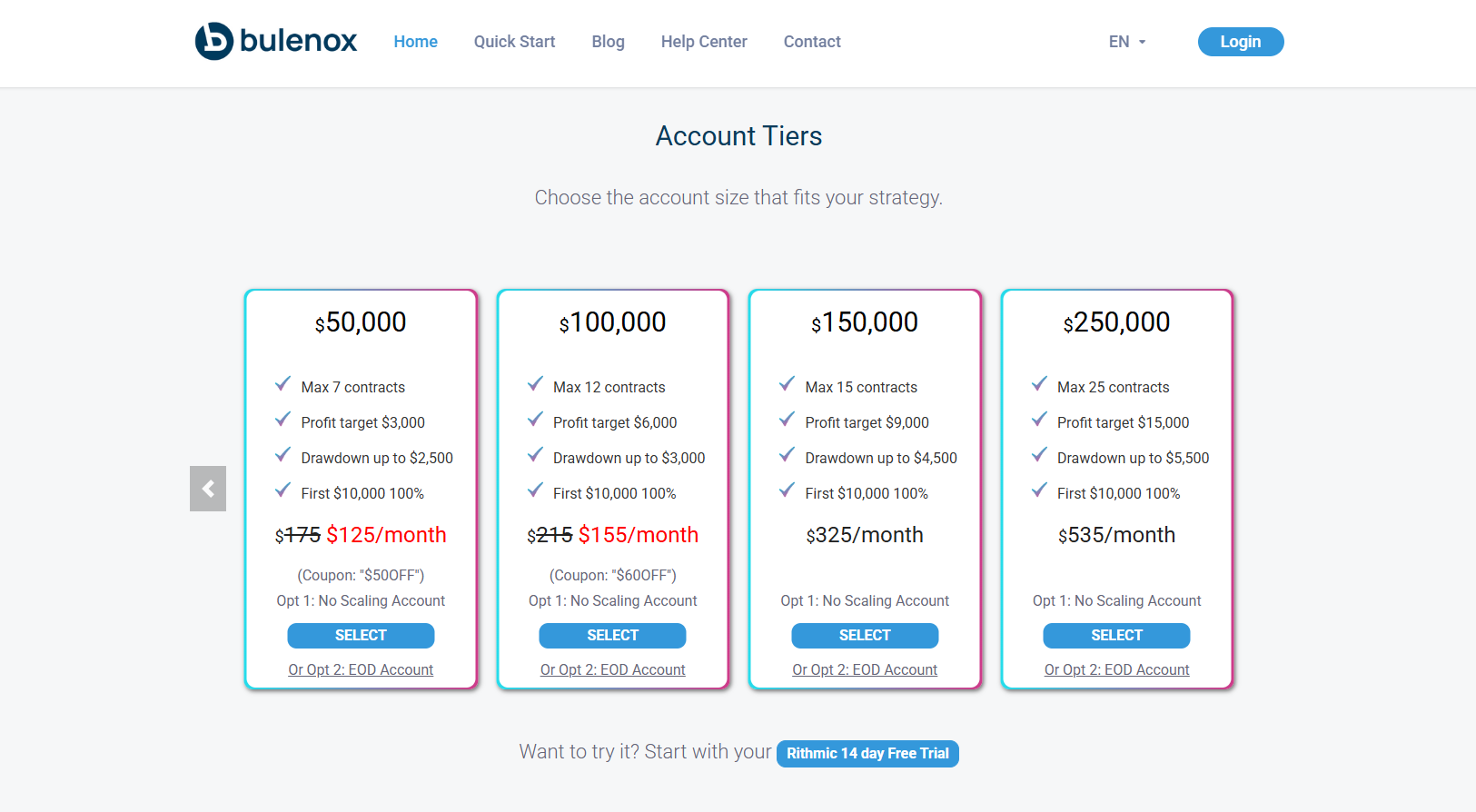
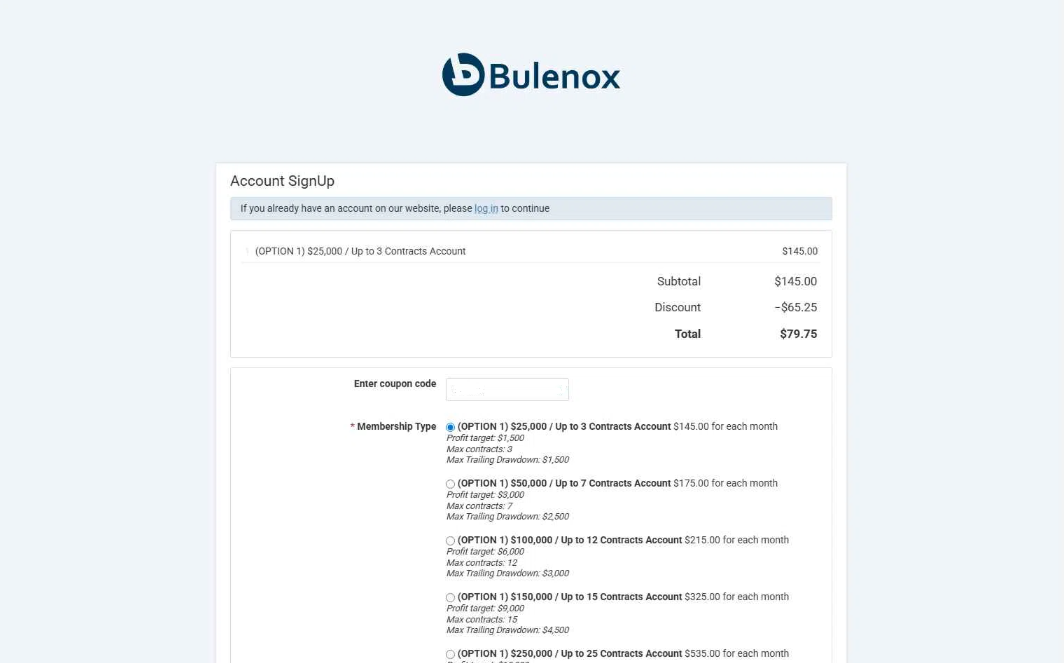
Activation Fee $79 - $125 $149 (Standard) $0 (Starter Model) $0 (Promo) $143 - $898
Pass Window 1 Trading Day 1 Day (TopstepX) 2 Trading Days 8 Days (to Payout) 10 Trading Days
Drawdown Logic Intraday / EOD EOD Only EOD (Flex/Pro) Static Option EOD / Intraday
Daily Loss Limit None (Intraday) Strict Limit None (Pro) Strict Limit Strict Limit
Payout Limit 6 Payouts (Max) No Cap $100,000 Cumulative No Cap No Cap
Metals (Gold/SI) Banned Allowed Restricted Allowed Allowed
Max Accounts 20 Accounts 5 Accounts 10 Accounts 3 Accounts 10+ Accounts

11.2. Which Prop Firm is Right for You?

Selecting a prop firm in 2026 is a strategic decision based on whether the trading methodology favors short-term capital generation or long-term account management. The following breakdown analyzes the five leading platforms based on their specific risk profiles.

A. Apex Trader Funding: Best for High-Volume Capital Generation

Apex is the primary choice for traders utilizing a rotation-based strategy.

  • Primary Advantage: It offers the lowest entry barrier in the industry (~$65 per 50K account). The ability to manage 20 accounts and pass in one trading day allows for rapid scaling of initial capital.
  • Structural Limitation: The 6-payout retirement cap and the restriction on Metals make it a short-term funding source rather than a permanent long-term solution.

B. Topstep: Best for Long-Term Trading

Topstep remains the standard for traders seeking a permanent institutional funding solution.

  • Primary Advantage: There is no lifetime payout cap. Once funded, the account can be held indefinitely, and the platform offers advanced tools like TopstepX for performance analysis.
  • Structural Limitation: Risk parameters are strict. The Daily Loss Limit (DLL) is absolute; hitting it results in an immediate failure, requiring high intraday discipline.

C. MyFundedFutures (MFFU): Best for Flexible Rules

MFFU has captured market share by eliminating activation fees and simplifying the funded experience.

  • Primary Advantage: The Pro Account operates without consistency rules or daily loss limits, providing a larger margin for error for discretionary swing traders.
  • Structural Limitation: While there is no per-account limit, MFFU enforces a total cumulative payout cap of $100,000 per user, which restricts long-term scalability.

D. TradeDay: Best for Static Drawdown

TradeDay is one of the few major survivors still utilizing the Static Drawdown model in 2026.

  • Primary Advantage: The drawdown floor remains fixed. For a 50K account with a $500 static limit, the liquidation point stays at $49,500 permanently, regardless of accrued profit.
  • Structural Limitation: Profit targets are relatively lower, but contract limits are highly restricted. This model does not support the high-volume execution of a multi-account portfolio.

E. Bulenox: Best for Large Portfolio Scaling

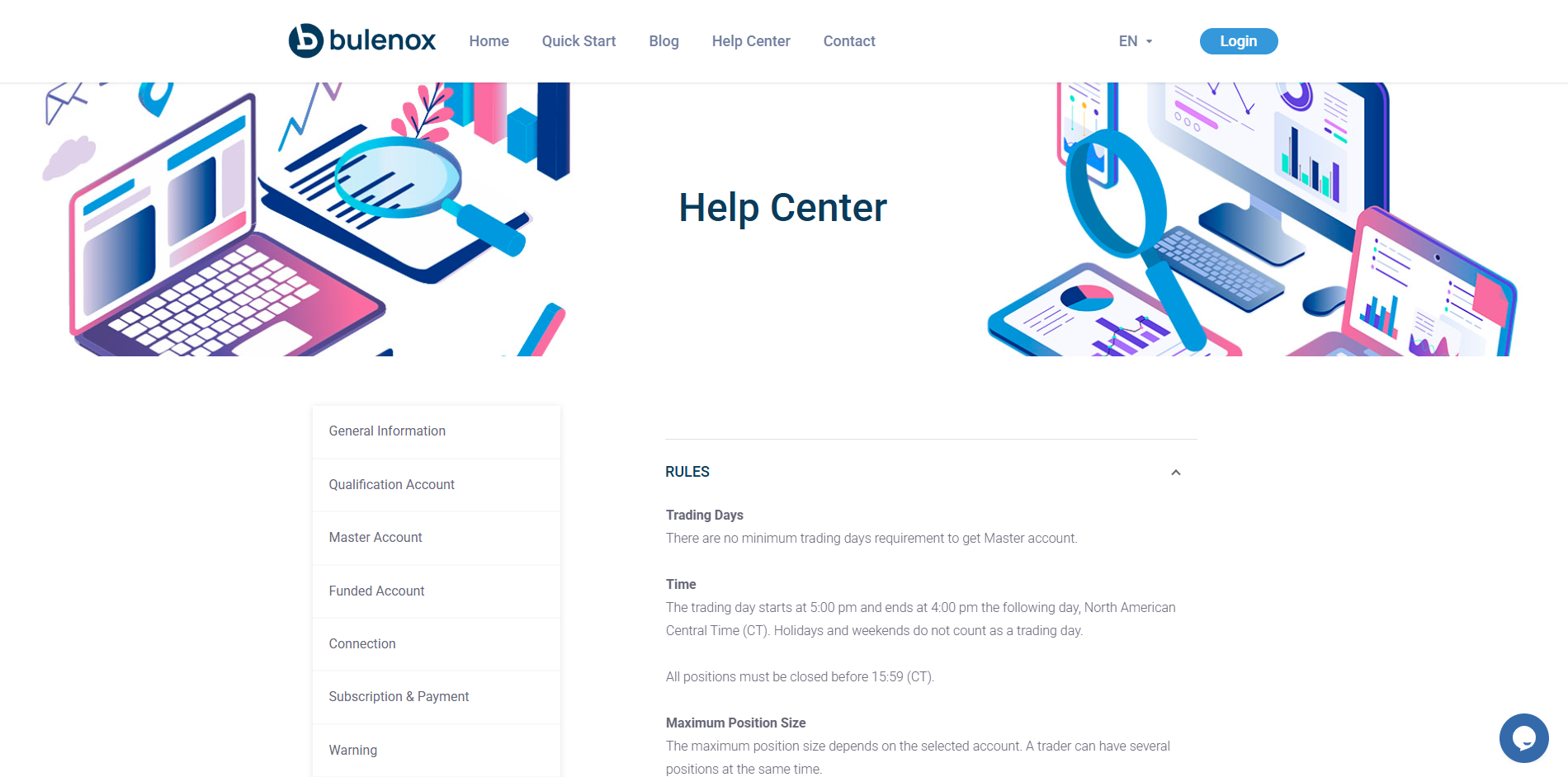
Bulenox provides an alternative for traders who prefer a traditional environment with high account limits.

  • Primary Advantage: Bulenox allows for a large number of active accounts (10+) without a retirement cap, offering a middle ground between the high-volume nature of Apex and the longevity of Topstep.
  • Structural Limitation: The activation fees are the highest in the industry ($143 - $898), and the mandatory 10-day evaluation period is significantly slower than the modern 1-day standard.

11.3. Utilizing Apex for Initial Capital Generation

Despite the 6-payout limit, Apex remains a highly cost-effective platform for capital generation. No other firm allows for the management of a 20-account portfolio with such minimal capital investment.

The Account Rotation Strategy:

  • Phase 1 (Initial Generation): Utilize Apex to generate capital across a portfolio of accounts acquired during high-discount cycles.
  • Phase 2 (Capital Allocation): Allocate a portion of those profits to fund accounts with Topstep or MFFU, which offer uncapped, long-term holding structures.
  • Phase 3 (Continuous Rotation): Maintain a rotation of Apex accounts to generate a consistent stream of initial funding for personal brokerage accounts.

12. How to Register and Set Up Your Account

In the 2026 ecosystem, technical trading skill must be paired with strict administrative compliance. Apex enforces rigorous security and risk protocols. If compliance requirements or Two-Factor Authentication (2FA) are not met, payouts may be denied.

12.1. Step 1: Choosing a Personal or Business Account

During registration, users must select their legal entity type. Under the current guidelines, once registered, the account type is permanent.

  • The 1+1 Rule: Traders are permitted exactly one (1) Personal User Account and one (1) Business User Account. Creating multiple accounts to bypass limits is a policy violation, resulting in the termination of all accounts and forfeiture of funds.
  • Business Verification: If registering as a Business/LLC, the entity must be solely owned and controlled by the trader (100% ownership or 80% S-Corp sole shareholder). Documentation such as an EIN and an Operating Agreement will be required.
  • The Banking Lock: Payout destinations must strictly match the registration type. A Personal account cannot distribute funds to a Business bank account, and vice versa.
Apex Trader Funding registration workflow for personal and business accounts

12.2. Step 2: Setting Up Two-Factor Authentication (2FA)

Two-Factor Authentication (2FA) is mandatory for all users who have passed an evaluation.

  • The Notification: Upon passing and logging into the dashboard, account access is restricted until 2FA is enabled.
  • The Setup: Users must use an authenticator application (e.g., Google Authenticator, Authy, or Microsoft Authenticator) to scan the provided QR code.
  • Operational Requirement: Disabling 2FA will remove essential dashboard functions, including access to Evaluation and PA charts. It is a permanent requirement for operational security.
Apex Trader Funding account login page with username or email

12.3. Step 3: Avoiding Prohibited Trading Strategies

To maintain funded status, traders must avoid practices flagged by the compliance system:

  • The Hedging Restriction: Holding long and short positions simultaneously on the same or correlated instruments is strictly prohibited. Trades must be directional.
  • Stop Loss Requirement: All trades should incorporate a defined risk management strategy.
  • System Exploitation: Strategies that exploit the simulation environment (such as High-Frequency Trading, non-directional bracket trading, or using the trailing threshold as a stop loss) are banned.
  • News Trading: While trading during news is allowed, non-directional order placement (placing orders on both sides to capture arbitrary volatility) is forbidden.

12.4. A Step-by-Step Guide to Getting Funded

Navigating the administrative requirements is critical to securing funding. The following timeline outlines the standard administrative process from evaluation to a live Performance Account (PA).

Phase Milestone Action Item
0-2 Hours Account Setup Select entity type (Personal/Business) and secure evaluation accounts during a promotional cycle.
2-24 Hours The Evaluation Reach the profit target in 1+ days. Adhere to risk parameters and avoid hedging.
24-30 Hours Security Setup Enable 2FA via an Authenticator App. Complete KYC verification through Rise or Plane.
30-36 Hours PA Activation Sign the PA Agreement and W-8BEN (Tax) forms. Pay the Lifetime PA Fee.
36-48 Hours PA Trading Commences The PA goes live. Utilize Micro contracts to build the initial Profit Buffer (e.g., $50,100).

12.5. Final Compliance Checklist

Apex Trader Funding in 2026 requires strict adherence to compliance protocols. By combining competitive evaluation pricing with rigorous compliance (2FA, KYC, and trading restrictions), the platform is structured specifically for disciplined traders.

The Compliance Strategy:

  • Optimize Entry Costs: Utilize promotional periods to manage a portfolio of accounts and diversify risk efficiently.
  • Adhere to Risk Parameters: Implement stop losses and strictly avoid prohibited trading practices.
  • Maintain Compliance: Verify that 2FA is active and banking details match the registration entity to prevent payout delays.

13. Customer Support and User Reviews

In the current ecosystem, the relationship between the trader and the firm is governed by documented evidence, not dialogue. Understanding the support protocols is as critical as the trading strategy to protect capital from technical anomalies.

Apex Trader Funding customer support contact form page

13.1. Why You Must Record Your Screen (OBS)

A critical practice for professionals in the current market is maintaining a continuous recording of every trading session. The support desk rarely accepts text-based descriptions of platform errors.

  • Screen Recording Protocol: Professional multi-account traders utilize OBS (Open Broadcaster Software) to record their entire screen, including the Rithmic/Tradovate DOM and their system clock.
  • Dispute Resolution: If the platform lags or an order fails to close, causing an account breach, video evidence serves as the primary verification method. Without a timestamped video demonstrating a platform-side failure (independent of local internet issues), Apex maintains a strict "User Responsibility" policy.
  • The Reality: In active markets, a server delay can breach drawdown limits across a 20-account portfolio. Having video proof is the only pathway to an account reinstatement or a manual trade adjustment.

13.2. Common Mistakes vs. Expert Tactics

Community sentiment regarding Apex is divided based on how traders view the firm's algorithmic risk parameters.

Novice Perspective Professional Perspective
"The Drawdown is Restrictive": Novice traders often view the intraday trailing drawdown as overly punitive. "The Drawdown is a Parameter": Professionals view the drawdown as a defined $2,000 risk buffer acquired at a promotional cost.
"The Rules are Overwhelming": New traders struggle with the 50% consistency rule and the 6-payout account closure limit. "The Rules Provide Structure": Professionals utilize spreadsheets to track compliance, viewing the 6-payout limit as a cycle for account rotation.
"Support is Unresponsive": Beginners often submit vague tickets without proof and receive automated denials. "Support Requires Evidence": Professionals submit tickets with video links and log files to facilitate objective, data-driven reviews.

13.3. Community Sentiment: Focus on Fast Payouts

The trader base in 2026 focuses heavily on efficiency. Professional discussions center on withdrawal efficiency rather than long-term account compounding.

  • Objective Evaluation: Traders evaluate the firm based on operational efficiency rather than brand loyalty.
  • The Consensus: As long as payout processing remains efficient and promotional cycles minimize initial risk, professional traders will continue to utilize Apex as a primary source for initial capital generation.

14. Is Apex Right for Your Trading Style?

The 2026 Apex model functions as a strict algorithmic evaluation. It requires a systematic approach rather than discretionary speculation. Participation should be based on an objective assessment of a trader's strategy against the platform's rigid risk parameters.

14.1. Who Should Avoid the Apex 4.0 Model?

Traders should not deploy capital into the 4.0 ecosystem if their strategy relies on any of the following:

  • Macro Swing Traders: If the edge is built on trading Metals (GC/SI) or holding positions over multiple days, the 2026 Metals restriction and the 4:59 PM ET Cut-off make compliance impossible.
  • Unsystematic Discretionary Traders: Traders who struggle with risk management or widening stop losses will be restricted by the Intraday Trailing Drawdown. The algorithm requires strict adherence to risk limits, not market conviction.
  • Long-Term Account Holders: Traders seeking a single account for multi-year trading should consider other platforms. The 6-Payout cap ensures the Performance Account (PA) is a short-term asset, not a permanent holding.

14.2. Who is the Apex 4.0 Model Best For?

Traders should strategically engage this ecosystem if they can operate within these tactical parameters:

  • High-Volume Short-Term Traders: Traders utilizing high-liquidity indices (NQ/ES) with a trade copier to multiply small, high-probability wins across multiple accounts. For this profile, the ~$65 promotional entry provides highly efficient capital leverage.
  • Systematic Operators: Traders who prioritize administrative compliance. They utilize 2FA, record sessions via OBS, mandate stop losses, and mathematically manage daily profits to remain under the 50% Consistency Rule.
  • Portfolio Managers: Traders who view a PA as a short-term asset. They execute the maximum 6 withdrawals, close the account, and immediately rotate a new portfolio of 20 evaluations into their operational cycle.

14.3. The Math: Risk vs. Reward Explained

To maintain objectivity, the following is a quantitative breakdown of a maximized 20-account portfolio:

  • The Inventory Cost: ~$3,900 (Includes 20 Evaluations at ~$65 and 20 Lifetime PA Fees at ~$130).
  • The Risk Capital Controlled: ~$40,000 in total drawdown buffer ($2,000 trailing limit × 20 accounts).
  • Maximum Gross Withdrawal: $240,000 (Based on extracting the $2,000 cap per account × 6 payouts × 20 accounts).

14.4. Conclusion on Apex Trader Funding

Apex 4.0 serves as a highly structured funding source. Success requires strict adherence to algorithmic rules rather than emotional trading. By leveraging promotional pricing, maintaining the Profit Buffer, and executing the 6-payout rotation, it remains a highly effective capital-generation platform in the 2026 prop firm industry.

15. Frequently Asked Questions (FAQ)

In the 2026 One-Time Payment (OTP) ecosystem, understanding the operational rules is strictly required. Below are the definitive answers to the most critical compliance and technical questions within the current Apex framework.

Apex Trader Funding classifies traders as independent contractors. Payouts are processed via Rise or Plane, requiring submission of a W-8BEN (for non-US citizens) or W-9 (for US citizens) during the KYC process. Apex does not withhold taxes; traders are 100% responsible for reporting this as consulting or service income to their local tax authority according to regional laws.

Trading during high-impact news (CPI, FOMC, NFP) is permitted if it aligns with a consistent trading strategy. However, non-directional order placement (placing orders on both sides of the market simultaneously) or executing trades solely to capture arbitrary volatility is strictly prohibited. Profits generated from these practices will be denied under the Sustainability Clause.

No. The use of High-Frequency Trading (HFT) algorithms, pre-programmed scripts, or any automated execution logic is a direct violation of the Terms of Service. All trades must be executed manually by the registered account owner.

The account was likely liquidated by the Intraday Trailing Drawdown. This mechanic tracks the Peak Unrealized Profit in real-time. If a position reaches $1,500 in profit but is not closed before the market retraces, the drawdown floor remains at that peak level.

  • New Drawdown Floor = Peak Unrealized Balance - Allowed Drawdown
  • If the retrace hits that new floor, the account fails immediately, even if the trade was still technically profitable.

Using a VPN to conceal identity, device, or geographic location will result in an immediate account restriction. However, using a dedicated Trading VPS (such as Beeks or ChartVps) for the purpose of reducing latency is permitted. When utilizing a VPS, login data must remain consistent to avoid triggering multi-user compliance alerts.

Every individual is permitted exactly one (1) Personal User Account and one (1) Business User Account. Attempting to create additional accounts using household members' names or alternative emails to bypass the 20-account maximum will result in the immediate closure of all connected accounts and the forfeiture of all balances.

The restriction on metals is permanent. Due to extreme liquidity gaps and high exchange-side margins, Apex has removed all precious metals from the approved list. Attempting to open a position in GC or SI will trigger a Contract Violation and result in account termination. Traders must focus their portfolio on approved instruments like NQ, ES, CL, or MBT (Micro Bitcoin).

Holding any open position through the 5:00 PM ET market close is a strict rule violation. The server performs an automated liquidation at the market close. If an open position is detected, the account fails instantly and becomes ineligible for a payout. Traders are strictly responsible for flattening all trades by 4:59:00 PM ET.

Traders may use a trade copier to synchronize trades across their 20 Apex accounts. Copying trades between different prop firms is technically possible but carries operational risk. Differences in data feeds and server latency between firms can lead to arbitrage flags or execution disparities, potentially resulting in compliance audits.

In the 2026 OTP model, resets are not available. Once a risk parameter is breached, the account permanently fails. Due to the low entry cost during promotional cycles, the most cost-effective approach is to close the failed account and purchase a new 30-day evaluation.

16. Conclusion

The OTP structure has officially transitioned Performance Accounts into high-leverage, short-term assets. With the implementation of the 6-payout account closure limit paired with promotional entry costs, the platform functions as a structured capital-generation platform rather than a long-term trading solution.

Success in 2026 requires strict technical compliance in addition to market expertise. The high retail failure rate is a direct result of the Intraday Trailing Drawdown and the 50% Consistency Rule, which act as algorithmic filters to enforce strict risk parameters. However, for traders utilizing a multi-account strategy, Apex provides a highly effective method for generating initial capital.

Traders should manage each account as a short-term asset. Execute the maximum six withdrawals, strictly maintain the profit buffer protocols, and rotate your account portfolio. In the 2026 landscape, Apex serves as either a highly effective funding source or a strict algorithmic barrier; the outcome depends entirely on operational discipline.

Disclaimer: This review is based on the Apex Trader Funding "4.0" model as of March 30, 2026. Proprietary trading rules, pricing, and payout structures are subject to frequent updates and may change without prior notice. This content is for informational and educational purposes only and does not constitute financial advice. Futures trading involves substantial risk; trade only with capital you can afford to lose. Always verify the latest terms on the official website before purchasing.

References:

Start Your Apex Trader Funding Journey

50K evaluation accounts from ~$65 with promo code WDRFRMJD. One-time payment, CME direct access, up to 20 accounts.

WDRFRMJD